.svg)
-1.svg)


Consumers are increasingly told on social media that only certain bottles count as “real” olive oil. They hear that only certain regions, harvest dates, production methods, packaging, flavor profiles, or those approved by a particular app or influencer are worth buying. Some of this advice is meant to be educational. But too often, it leaves people confused, anxious, or suspicious of perfectly good olive oil on the supermarket shelf.
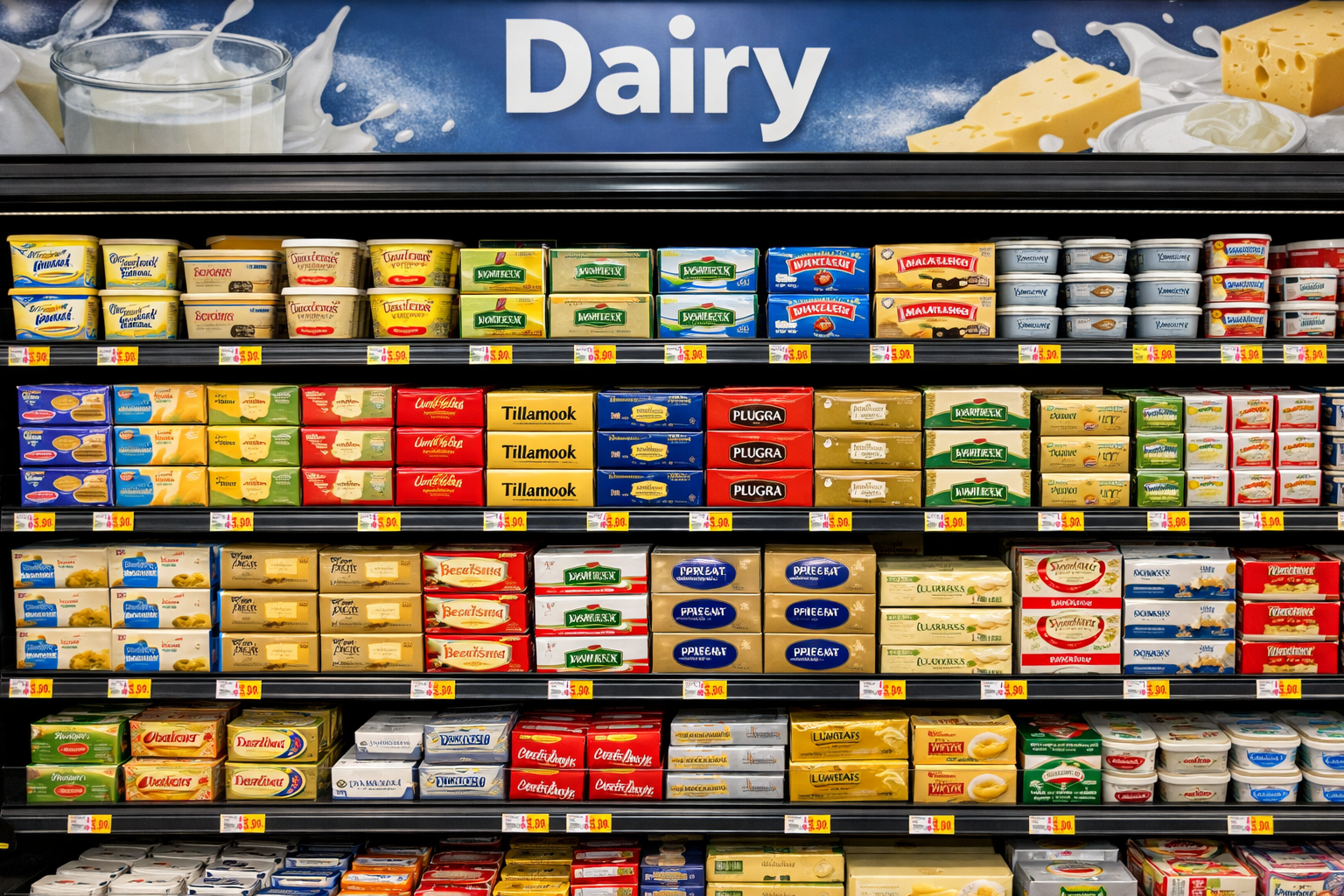
Butter does not seem to have this problem.
In North America, we have an extraordinary range of choices: cultured French butter, Irish butter, organic, grass-fed options, whipped butter, European-style bricks, and plain old household-name butter.
And here’s the thing: no one claims supermarket butter isn’t “real” butter simply because it’s different from a small-batch artisanal one. We instinctively understand that different butters serve different purposes, at different prices, with different flavors.
Olive oil deserves that same common-sense perspective.
Why There’s Space in the Market for All Olive Oils
Like wine, beer, and coffee, olive oil spans a range:
Premium extra virgin olive oil
These oils pack a powerful punch in both flavor and health benefits. Often early-harvest and more robust, they tend to have higher levels of antioxidants and a peppery finish.
Everyday extra virgin olive oil
Everyday, extra virgin olive oil is the workhorse of the kitchen — versatile enough for nearly everything, and it has good levels of antioxidants. Most of the olive oil on the supermarket shelf will be from this category.
Refined olive oil
Sometimes you don’t want bold flavor. In those recipes, light-tasting or regular "olive oil" is the right choice. Even though it is refined, these olive oils are still predominantly monounsaturated fat, which makes them a healthy choice with some virgin olive oil enrichment.
Each has a role. Each has value.
Just as many households keep both a premium butter for spreading on warm bread and a standard butter for baking, it makes sense to keep more than one olive oil in rotation.
A Healthier Fat for Every Budget
Large population studies consistently associate higher olive oil intake with improved heart health and longevity. Even moderate increases in olive oil consumption can shift overall dietary fat quality in a positive direction. From a public health perspective, olive oil should never be gatekept.
When consumers feel judged or anxious about making the “wrong” olive oil choice, we risk discouraging the very habit that research consistently supports: using olive oil more often.
If someone switches to olive oil for weekday cooking, keeps an affordable everyday extra virgin olive oil on the counter to use generously, or splurges on a bold early-harvest bottle for finishing dishes — they’re all wins.
The science doesn’t suggest that olive oil benefits only a select few with access to specialty bottles. The consistent message across decades of nutrition research is simpler and more democratic: populations that use olive oil regularly as a primary fat tend to fare better over time.
So what does this mean when you’re standing in the olive oil aisle? It means you do not have to find the one “perfect” bottle. You just need to choose the olive oil that fits how you cook, what you enjoy, and what you want to spend.
How to Buy Olive Oil with Confidence
Buying olive oil doesn’t have to feel complicated — and you don’t need an app to tell you whether a bottle is “approved” before you put it in your cart.
A few simple guidelines:
- Decide how much you want to spend. You don't need to spend a lot, and it's fine to get a store brand or something on sale!
- Don’t get overwhelmed by label language. Terms like “early harvest,” “robust,” “estate bottled,” “single-origin,” and “monovarietal” can help describe style, flavor, or production choices. They can be useful, but they are not required to buy a good olive oil.
- Start with the type of olive oil. For bolder flavor and naturally occurring antioxidants, choose extra virgin olive oil. For a neutral taste or a lower price point, choose regular or light-tasting olive oil.
- Look for quality seals. For extra confidence, look for the NAOOA Certified Seal or Extra Virgin Alliance seal.
- Check the packaging and date
- Check the best-by date to make sure you’ll have time to use it.
- Choose a container size that you can finish within a couple of months
- Don't stress over glass vs plastic vs tin (although dark or opaque containers will protect the oil from light).
- Store it properly at home. Keep it in a cool, dark place away from heat and light with the lid tightly closed.
The bottom line is that a good olive oil is one that you enjoy the flavor of and is in your budget.
The Takeaway: The best olive oil is the one you will actually use.
The marketplace doesn’t need to be divided into “good” and “bad.” It can simply reflect diversity.
Just as there’s room in your fridge for more than one butter, there’s room on your counter for more than one olive oil.
About the Author
Janey Lee creates consumer education content for AboutOliveOil.org on behalf of the North American Olive Oil Association. She is passionate about busting olive oil myths, making food and health information easier to understand, and helping more people feel confident using olive oil every day.

 The North American Olive Oil Association is committed to supplying North American consumers with quality products in a fair and competitive environment; to fostering a clear understanding of the different grades of olive oil; and to expounding the benefits of olive oil in nutrition, health, and the culinary arts. | © North American Olive Oil Association. All Rights Reserved.