.svg)
-1.svg)



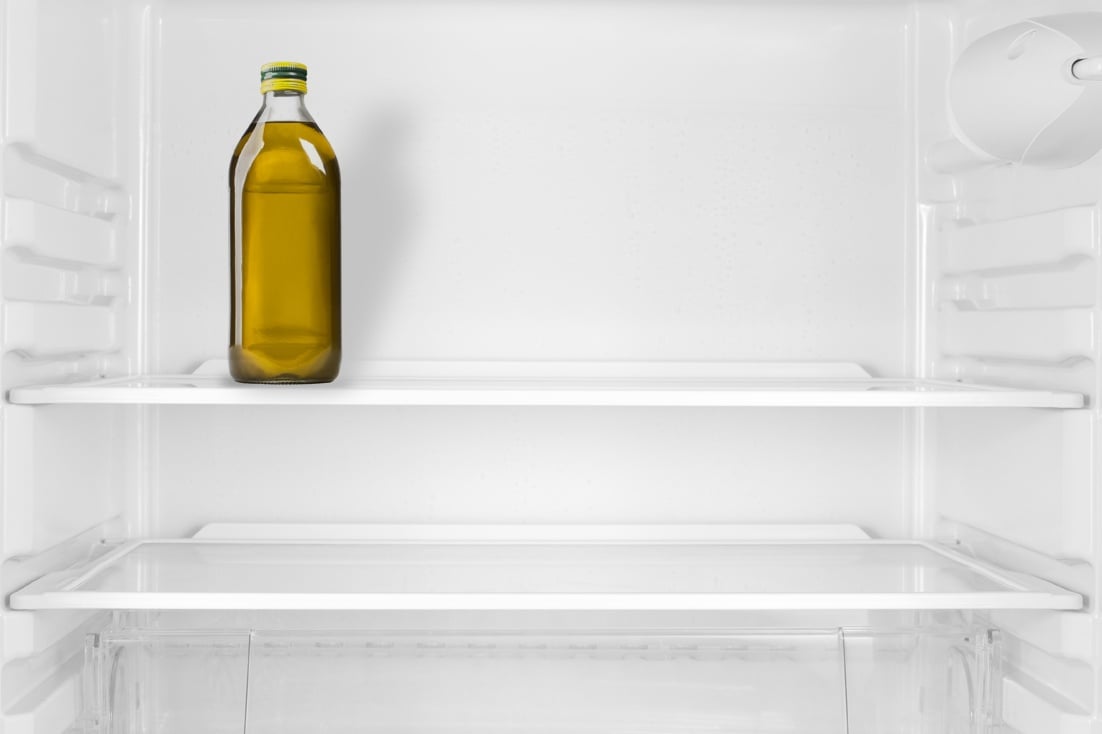
Experts agree that olive oil should be stored in a cool, dark place. But does that mean you should keep it in the refrigerator?
The answer is a little more nuanced than a simple yes or no.
Olive oil naturally changes when it gets cold. At refrigerator temperatures, it may become cloudy, form crystals, or even solidify. This is completely normal. Once the oil returns to room temperature, it will become liquid again. A gentle shake is all that's needed before using it.
In fact, researchers and professional olive oil tasters often refrigerate oils they want to preserve for long periods. Cold temperatures significantly slow oxidation—the process that eventually causes olive oil to become rancid. Organizations such as the International Olive Council (IOC) also store reference oils under refrigerated conditions to help maintain their quality.
So why isn't refrigeration recommended for most consumers?
The biggest reason is practicality. Olive oil stored in the refrigerator must warm back up before it can be poured or used. In addition, repeatedly moving the same bottle between the refrigerator and room temperature can create condensation and expose the oil to constant temperature changes, which may do more harm than good over time.
For everyday use, the best place to store olive oil is still a cool, dark cupboard or pantry away from heat sources such as the stove or direct sunlight. Keep the bottle tightly sealed, and purchase an amount you can reasonably use within a few months after opening.
However, refrigeration can make sense in certain situations. If you purchase a large container of extra virgin olive oil to save money but won't use it quickly, consider transferring the oil into several perfectly clean, smaller bottles. Keep one bottle in the pantry for daily use and store the unopened bottles in the refrigerator, bringing them out one at a time as needed. This minimizes repeated warming and cooling while helping preserve the remaining oil.
Can olive oil be stored in the refrigerator?
Yes, but not for everyday use. Refrigeration can help preserve olive oil by slowing oxidation, but for most people, storing olive oil in a cool, dark cupboard or pantry is the most practical option. If you refrigerate olive oil, allow it to return to room temperature before using it.
Researchers and professional olive oil tasters routinely refrigerate oils they want to preserve for extended periods. Cold temperatures slow the oxidation process that eventually causes olive oil to become rancid. The International Olive Council (IOC) also stores reference oils under refrigerated conditions to help maintain their quality.
For everyday cooking, however, refrigeration is usually unnecessary and less convenient.
Does refrigerating olive oil damage it?
No. Refrigeration does not damage olive oil. Olive oil naturally becomes cloudy, forms crystals, or solidifies when exposed to cold temperatures. Once it warms to room temperature, it returns to its normal liquid state.
If refrigerated olive oil has separated slightly after warming, simply give the bottle a gentle shake before using it.
Why don't experts recommend refrigerating olive oil every day?
The main reason is convenience. Refrigerated olive oil must warm up before it can be poured, and repeatedly moving the same bottle between the refrigerator and room temperature may expose it to condensation and unnecessary temperature fluctuations.
For most households, storing olive oil in a cool, dark pantry provides excellent protection while making it easy to use every day.
Does refrigeration make olive oil last longer?
Yes. Cold temperatures slow oxidation and can significantly extend the life of olive oil. That's why researchers often refrigerate valuable oil samples they want to preserve for future testing or tasting.
The benefit is greatest when the oil remains consistently cold. Repeated warming and cooling of the same bottle is generally not recommended.
When should you refrigerate olive oil?
Refrigeration is helpful when you won't use the oil for a long time. For example, if you purchase a large container of extra virgin olive oil, you can divide it into several perfectly clean, smaller bottles.
Keep one bottle in the pantry for everyday use and store the unopened bottles in the refrigerator. Bring out a fresh bottle only when needed. This approach helps preserve quality while minimizing repeated temperature changes.
What is the best way to store olive oil?
Store olive oil in a cool, dark place away from heat, light, and air. Keep the bottle tightly sealed and avoid storing it next to the stove, oven, or in direct sunlight.
Choose a bottle size that you can finish within a few months after opening to enjoy the best flavor and quality.
Does olive oil go bad?
Yes. Olive oil is a fresh fruit juice and will eventually become rancid. Heat, light, oxygen, and time all contribute to the oxidation process that causes olive oil to lose its fresh flavor and aroma.
Proper storage helps preserve quality, but no storage method will keep olive oil fresh indefinitely.
Can you tell if olive oil is authentic by putting it in the refrigerator?
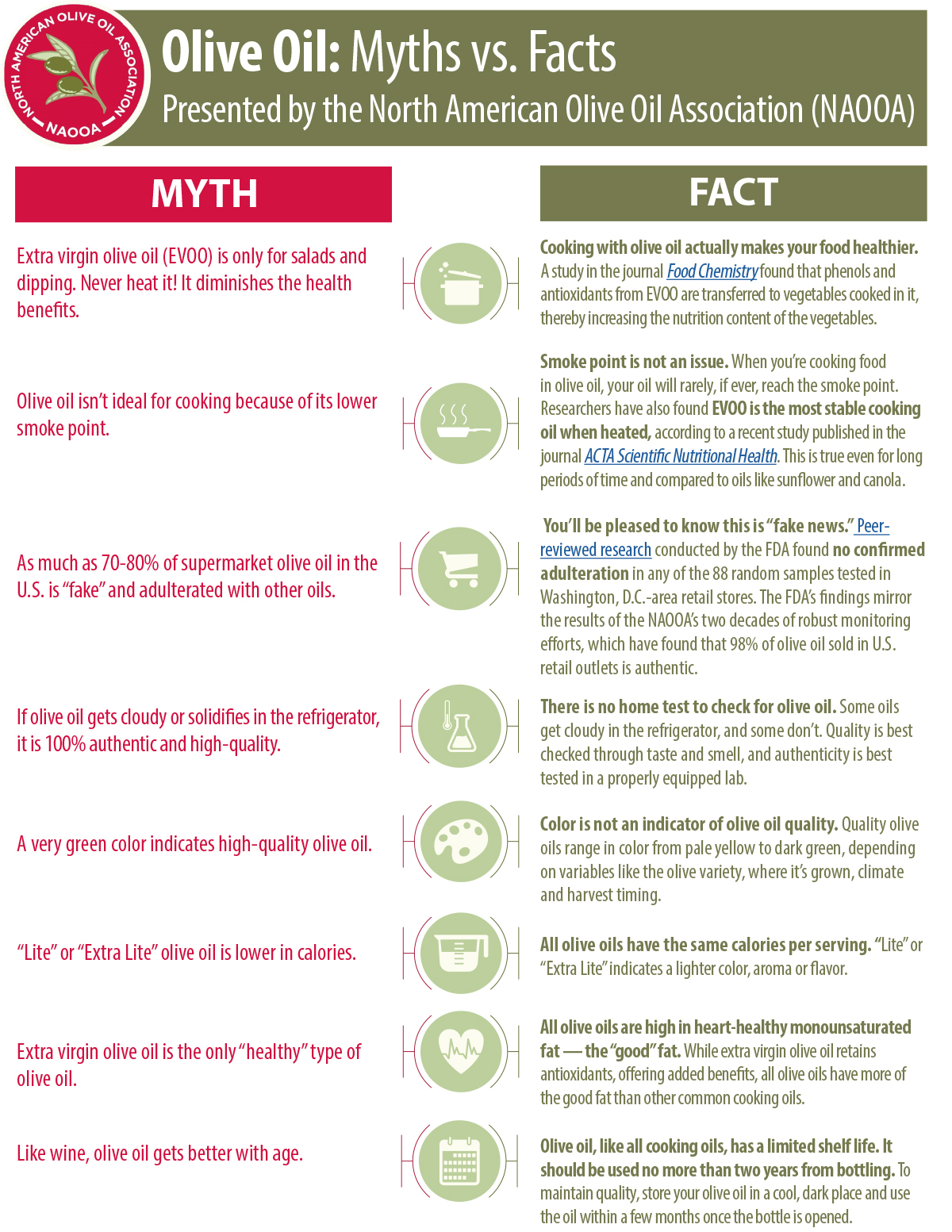
No. The refrigerator test does not determine whether olive oil is authentic. Both authentic and adulterated oils may solidify or remain liquid depending on their fatty acid composition.
There is no reliable home test for olive oil authenticity. If you want confidence that your olive oil meets internationally recognized quality and purity standards, look for the “NAOOA Certified” Seal Olive Oils, which indicates the oil has been independently tested to verify it meets global quality and purity standards.

 The North American Olive Oil Association is committed to supplying North American consumers with quality products in a fair and competitive environment; to fostering a clear understanding of the different grades of olive oil; and to expounding the benefits of olive oil in nutrition, health, and the culinary arts. | © North American Olive Oil Association. All Rights Reserved.