.svg)
-1.svg)


How to Select Olive Oil With Confidence
Choosing olive oil doesn’t have to be confusing. With so many labels, styles, and price points, knowing how to select olive oil comes down to understanding a few key fundamentals. These expert tips for buying olive oil will help you choose an oil that fits your taste, cooking needs, and budget—without falling for common myths.
1. Understand the Different Types of Olive Oil
When learning how to select olive oil, it’s important to understand not just the types of olive oil, but also that quality exists on a spectrum—even within the same grade.
Most supermarkets carry two main categories:
-
Extra virgin olive oil
-
Olive oil (sometimes labeled “classic,” “pure,” or “light-tasting”)
Extra virgin olive oil is considered the highest grade of olive oil, but that doesn’t mean all extra virgin olive oils are the same. Just like coffee, chocolate, or wine, there are good, better, and best options within the extra virgin category. Differences in olive variety, harvest timing, freshness, and handling all influence flavor and aroma.
In general, olive oils can be ranked by flavor intensity, from most to least:
-
Extra virgin olive oil
-
Classic olive oil
-
Light-tasting olive oil
All olive oils contain the same number of calories and are associated with heart-healthy benefits. While more flavorful oils often contain higher levels of naturally occurring polyphenols and antioxidants, milder olive oils and extra light–tasting olive oils may contain lower amounts of these compounds but are still healthful choices. Their neutral flavor makes them especially useful for everyday cooking, baking, and recipes where you don’t want olive oil flavor to dominate.
2. Check the Best-By Date or Harvest Date
Freshness matters when selecting extra virgin olive oil.
-
Extra virgin olive oil is best when it’s recently produced
-
Most oils retain quality for up to two years from bottling, depending on storage and handling
Look for a best-by date or, even better, a harvest date on the bottle. Fresher oil means better flavor and aroma.
3. Buy Bottle Sizes You’ll Use Quickly
Once opened, olive oil begins to degrade when exposed to light, heat, and oxygen.
To get the best flavor and quality:
-
Buy bottles you’ll finish within 2–3 months
-
Store olive oil in a cool, dark place
-
Keep the cap tightly closed
Think of olive oil like fresh produce—it’s not meant to sit around indefinitely.
4. Pay Attention to the Country (or Countries) of Origin
By law, olive oil labels must list the country or countries of origin, usually on the back label.
It’s common—and completely legitimate—for producers to:
-
Combine different olive varieties to achieve a consistent flavor profile
High-quality olive oil comes from many regions around the world, not just one country.
5. Look for Quality Assurance Seals
One of the best tips for buying olive oil is to look for independent quality verification.
Some bottles may display:
-
Regional origin seals
-
Certification or quality assurance seals
For example, the North American Olive Oil Association (NAOOA) Certified Seal indicates that a brand participates in a program involving random, off-the-shelf testing to verify compliance with widely accepted international purity and quality standards.
Common Olive Oil Buying Myths—Debunked
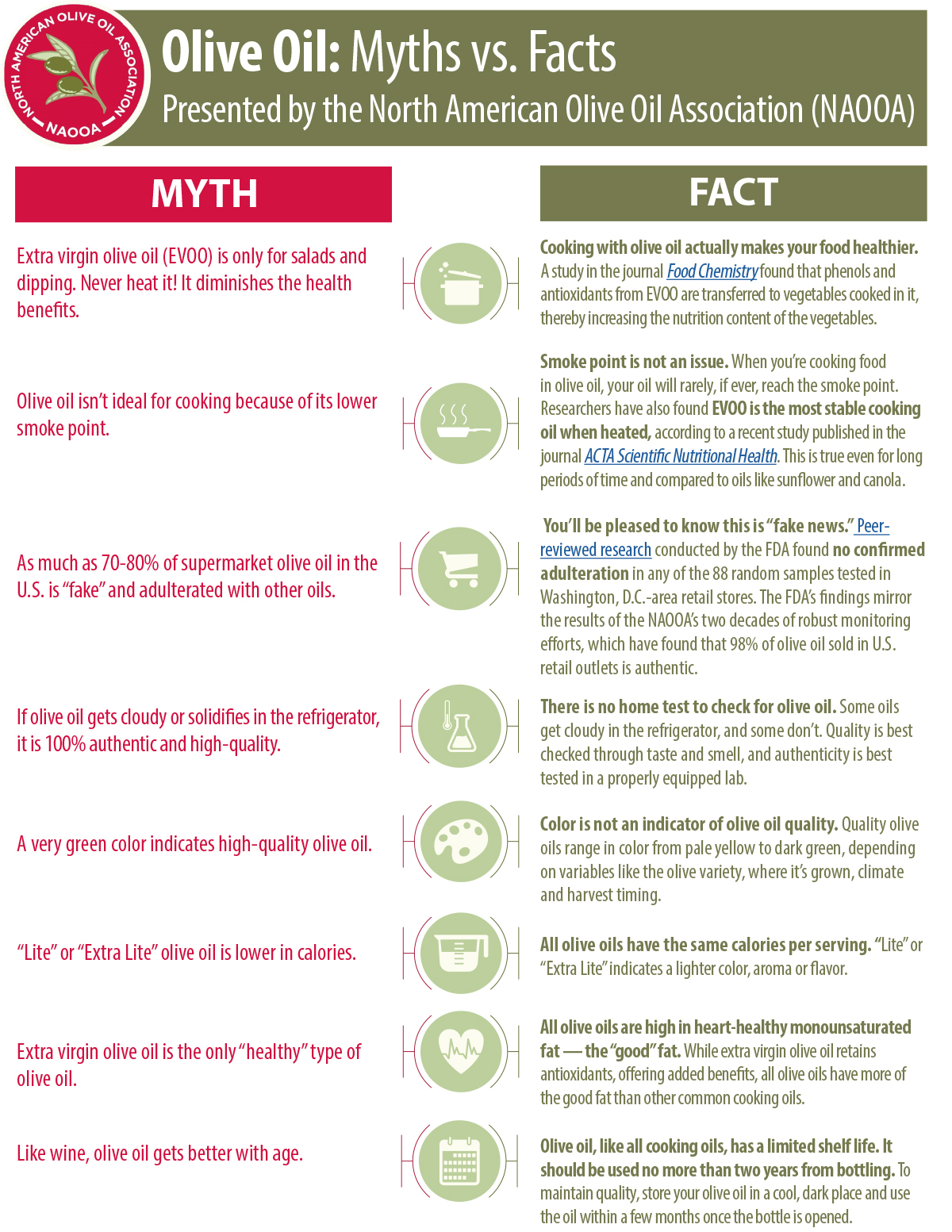
❌ Myth 1: Color Indicates Quality
False.
Olive oil color varies by olive variety and harvest timing. Professionals even use blue-tinted glasses when tasting to avoid color bias.
❌ Myth 2: You Can Test Olive Oil Quality at Home
False.
Popular “tests” like the fridge test or using oil as lamp fuel are not reliable indicators of authenticity or quality.
❌ Myth 3: Good Olive Oil Comes From Only One Country
False.
Excellent olive oil is produced around the world, including Spain, Italy, Greece, Portugal, France, Tunisia, Morocco, Turkey, Australia, Chile, Argentina, and the United States—among many others.
❌ Myth 4: Only Extra Virgin Olive Oil Is Worth Buying
False.
While extra virgin olive oil offers the most flavor, all olive oils are mechanically extracted without chemical solvents, unlike many common seed oils.
-
Classic and light-tasting olive oils are useful for baking and delicate dishes
-
They can be a great entry point for people transitioning away from neutral or less healthy cooking oils
❌ Myth 5: Olive oil from multiple countries is lower quality or “fake”
False.
Olive oil that lists more than one country of origin is not inferior or inauthentic. Multi-country olive oil blends are common, fully legitimate, and must disclose all countries of origin by law. Blending oils from different regions—much like blending wines—can help balance flavor and maintain consistent quality from year to year. The number of countries listed on a label does not determine quality; how the olives are grown, harvested, milled, and handled does.
The Takeaway: How to Select Olive Oil Wisely
The best olive oil is the one you’ll use often and enjoy. By understanding olive oil types, checking dates, choosing appropriate bottle sizes, and looking for quality assurance, you can shop with confidence and get the most value—both culinary and nutritional—from your olive oil.


 The North American Olive Oil Association is committed to supplying North American consumers with quality products in a fair and competitive environment; to fostering a clear understanding of the different grades of olive oil; and to expounding the benefits of olive oil in nutrition, health, and the culinary arts. | © North American Olive Oil Association. All Rights Reserved.